
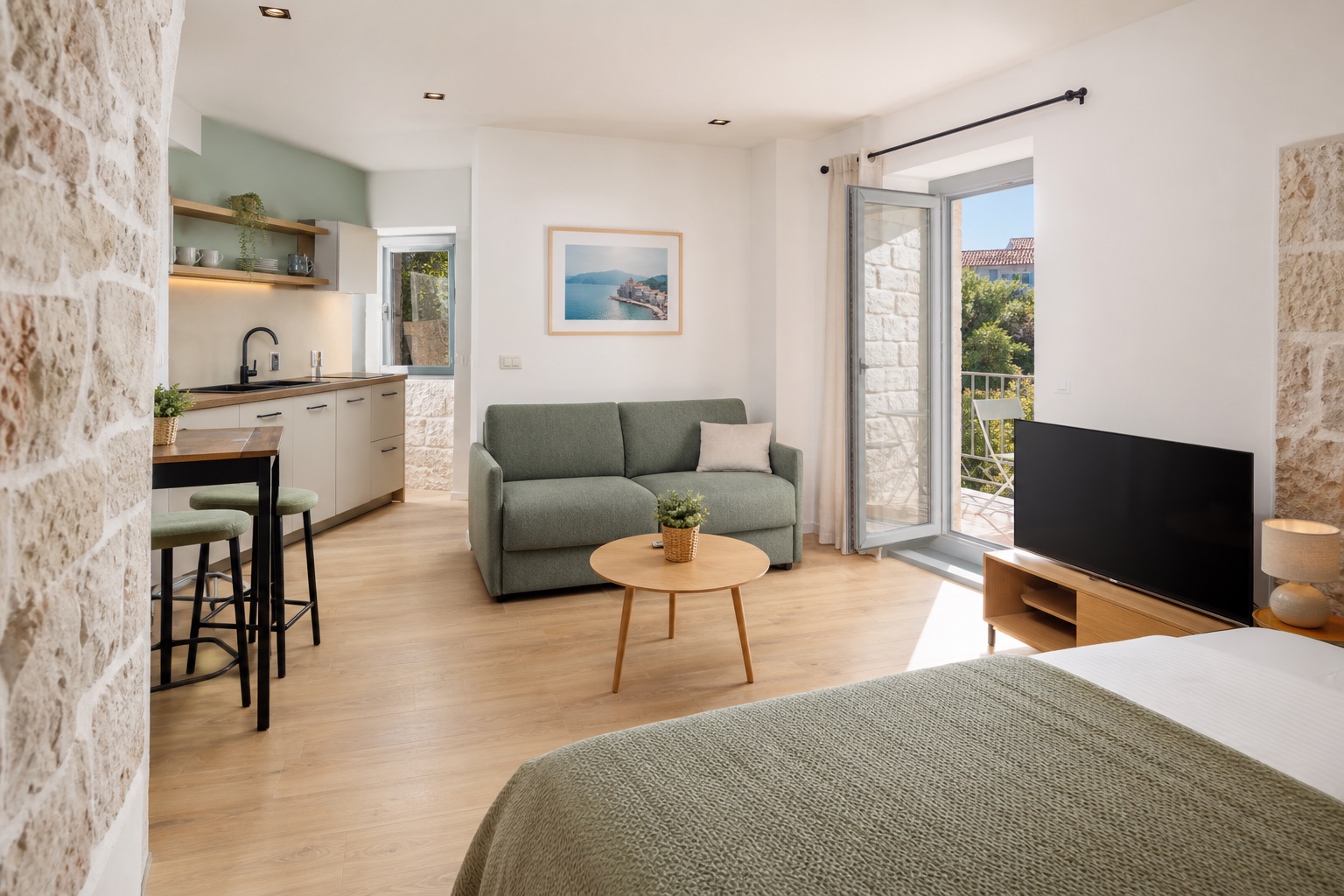
An empty night is perishable inventory
A night that remains unsold today cannot be stored and sold next month. That does not mean every free date should immediately be discounted across every channel. First distinguish a short gap between bookings, a weaker shoulder-season period and a date for which normal demand still has enough time to arrive.
An auction makes sense when a partner wants to sell one precisely defined available stay while retaining a lower boundary for acceptable revenue. It is not a replacement for the complete pricing strategy. Use it selectively for capacity that might otherwise remain empty or would benefit from an additional source of demand.
Select the dates you are prepared to expose
Begin with the calendar rather than a general desire for higher occupancy. Mark the exact arrivals and departures you can handle. Check minimum nights, cleaning time, existing bookings and whether a new stay could block a more valuable date that still has a realistic chance of selling through the usual channels.
A limited number of units and dates is enough for the first test. You can compare the outcome with your own expectation without changing the whole business. Each package needs a clear check-in, check-out, capacity, amenities and rules. Guests bid for a real stay and the property team knows what must be delivered after a win.
The protected floor should reflect an acceptable minimum
The minimum, or cold price, is the starting total below which the partner does not want to sell the listed stay. Base it on variable costs, operational effort, taxes and the minimum revenue that makes accepting the guest worthwhile. Do not choose it only to make the search card appear more attractive.
A floor that is too low can create a booking that adds work without meaningful incremental income. A floor that is too high can leave the package without bids. Treat early auctions as controlled tests. Record demand, valid bid count, final amount and the likely reason when a package does not attract interest.
Do not lower the public price for the whole season
Listing one empty stay at a protected floor is different from permanently reducing every available date. The package is tied to a specific stay and limited inventory. This lets the partner test incremental demand without signalling that every future night will be available under the same terms.
Dates that regularly sell at the planned rate do not need an auction merely because the channel exists. Value should come from additional occupancy, not from moving bookings away from channels that already work. Before listing, review pickup, expected demand and the remaining time until check-in.
Publish a package the guest can understand immediately
A strong package states the property, unit type, address or sufficiently precise location, photos, guest capacity, amenities, arrival, departure and total starting price. If breakfast, parking or another service is included, say so. Anything excluded or charged separately should be equally clear.
An unclear package creates questions at the exact moment an auction should support a faster decision. The search card, detail view and partner system must describe the same stay. Changing dates or units after a win breaks expectations and complicates payment, so operational details should be confirmed before activation.
Prepare the team for the winner and payment
After closing, the winner receives a reservation and a limited period for Stripe payment. The property should not treat the stay as paid simply because the auction has ended. The authoritative signal is the reservation status after server-side confirmation from the payment provider. Until then, inventory is held according to the defined deadline rules.
The person monitoring the Partner centre should understand the difference between a win, payment pending, confirmed payment, expiry and a possible refund. Update the property's internal calendar from the confirmed status rather than an assumption. Clear ownership prevents double-selling and shortens the response time to the guest.
Measure incremental outcome, not only booking count
For every package, record the protected floor, final amount, number of bids, lead time and whether the stay would probably have remained empty without the auction. Label the last point as an estimate, not evidence. Only repeated observations across comparable dates can show whether the channel creates incremental occupancy.
Include operational cost as well: communication, cleaning, check-in and support. The goal is not the greatest number of auctions but sustainable additional income from capacity without a better use. If normal demand returns, reduce the listings. If interest exists, gradually test other dates, lengths and unit types.
Start with a small pilot and improve the rules
A first pilot can cover a few empty stays in one property. Decide in advance who lists the package, who confirms availability, who follows the winning reservation and what result would make the test useful. Without clear owners, an auction can become one more screen that nobody monitors consistently.
After the pilot, review which offers attracted attention, where guests stopped and whether the descriptions were clear. Keep the rules that protect the floor and simplify work. Auction Split then becomes a controlled additional channel: the partner chooses capacity and threshold, the guest sees the conditions, and both share the same reservation status.
FAQ
Should every available date go to auction?
No. Start with stays that need incremental demand and where the auction is unlikely to displace realistic regular sales.
Who sets the starting price?
The partner sets the protected minimum starting price for the specific package and stay.
When does the property see a secure booking?
A reservation is created after closing, but it becomes paid only after server-side Stripe confirmation.